Alumni Story
Ethan Chirico ‘18
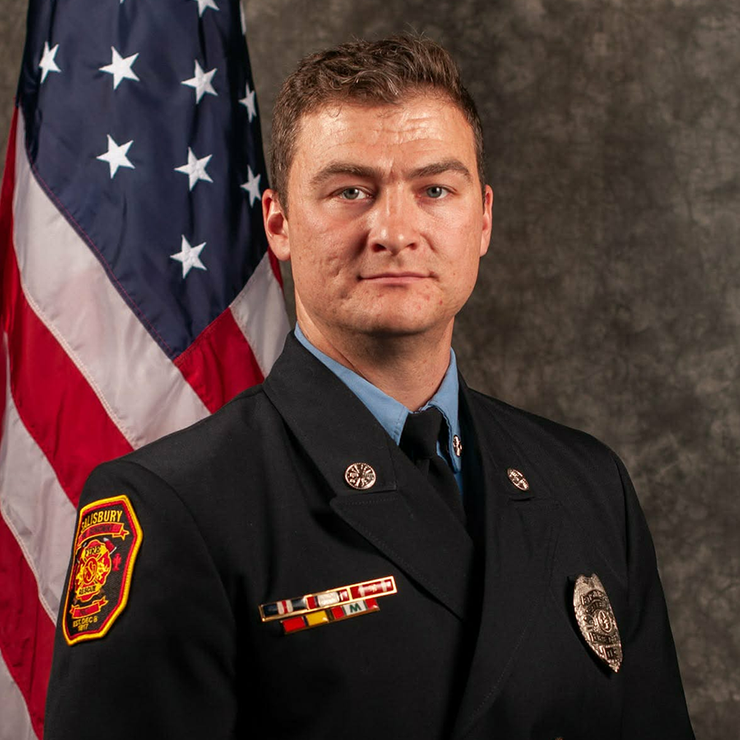
Ethan Chirico ‘18
Answering the Call: A Life of Service
Hometown: Havelock, NC
We need more empathy across society, we need people to do something if they are able. Thoughts and prayers and awareness are a start, but hands-on help is better."
A postcard that Ethan received from Catawba College with a picture of students playing lacrosse made the school stand out to him. As a high school lacrosse player looking at colleges, he wanted the option to continue to play lacrosse in college. "It’s good that Catawba is showing a wide variety of things it has to offer. You have no idea what’s going to speak to someone," he smiles.
Ethan applied to Catawba and participated in the challenging First Family scholarship competition. He won that prestigious scholarship to Catawba.
"I had no direction at first. I was coming in undeclared. My first class set me down the path for political science." His freshman seminar with sociology professor Dr. Buster Smith focused on the end of the world. While Ethan admits it sounds grim, he elaborates, "The class focused more on how societies have collapsed. We talked about how pandemics worked, political upheaval, and how grain shortages have caused upheaval. It was a really interesting course. I met some of my best friends in that class, and they’re my best friends now, after college."
The opportunity for international study was another highlight for Ethan. As part of an honors course with Dr. Michael Bitzer studying the Holocaust and genocide, Ethan traveled to Germany and Poland, visiting Warsaw, Auschwitz and Dachau. "It was very impactful to be in those places, to talk to the museum staff. It just shakes you." He adds, "I decided that year that I was going to do something that helped people directly. And now I’m a firefighter."
Another formative part of Ethan’s Catawba education was a World War II history class with Dr. Charlie McAllister. "We talked about the battles but also how people lived through the war, how people had to reevaluate themselves following it. We talked about Germany’s self-reckoning, and how other countries reckoned with the United States and its military might ever since. How civilians were commoditized and overlooked; the human cost of people fighting for power not caring who gets in the way." Ethan explains that these classes shaped the way he looked at the world. "And it’s held strong."
Initially, Ethan wanted to join the Peace Corps after graduation. "A representative from the Peace Corps explained that they generally don’t take people right out of college anymore. They need people who have skill sets, not just people who have a passion."
Around that time, another mailer caught his eye, requesting donations for a fire department. Ethan thought, "Firefighting is a skill, and it’s public service." He knew nothing about it. Ethan remembers talking to Dr. Ken Clapp, who was college chaplain. "He understood the connection between firefighting and the Peace Corps. He was very encouraging and said that service is, in and of itself, a benefit."
Ethan looked up the closest fire department, Salisbury, and asked if they took volunteers. As a municipal professional department, Salisbury did not but told him about the volunteer fire departments. Locke Fire Department just outside of Salisbury welcomed Ethan, gave him turnout gear, and within three days he went to his first fire. They directed him to a Fire Academy that started the next week: a three-month long program at the local community college. Ethan spent his junior-year summer completing Fire Academy.
Ethan sent job applications to several area fire departments, indicating that he couldn’t start work until after graduation. Salisbury Fire Department accepted his deferred application and advised him to earn his emergency medical technician (EMT) certification, required for all firefighters. Ethan achieved that during his senior year at Catawba. After an additional delay recovering from a knee injury, Ethan began work for the Salisbury Fire Department in August of 2018.
Ethan’s plan was to do firefighting for three years, then reassess what he wanted to do. "My second year of firefighting was COVID-19. It was upheaval, the busiest year ever. I got the first COVID shot four months before it was available to the populace." Ethan didn’t catch COVID but was in contact with a lot of people who had it, responding to medical calls during the pandemic. By the end of 2021 Ethan decided that he liked being a firefighter. It will soon be his eighth year.
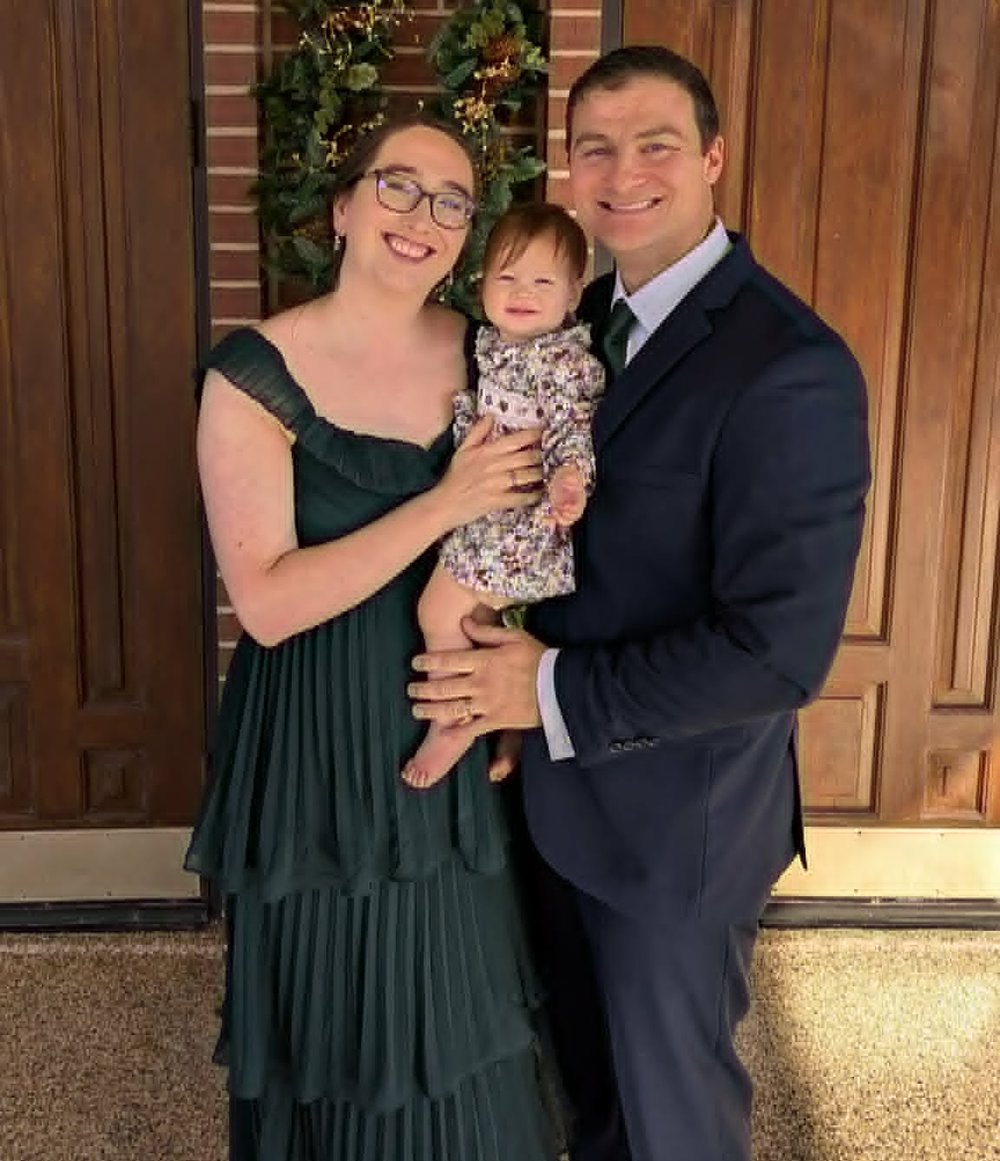
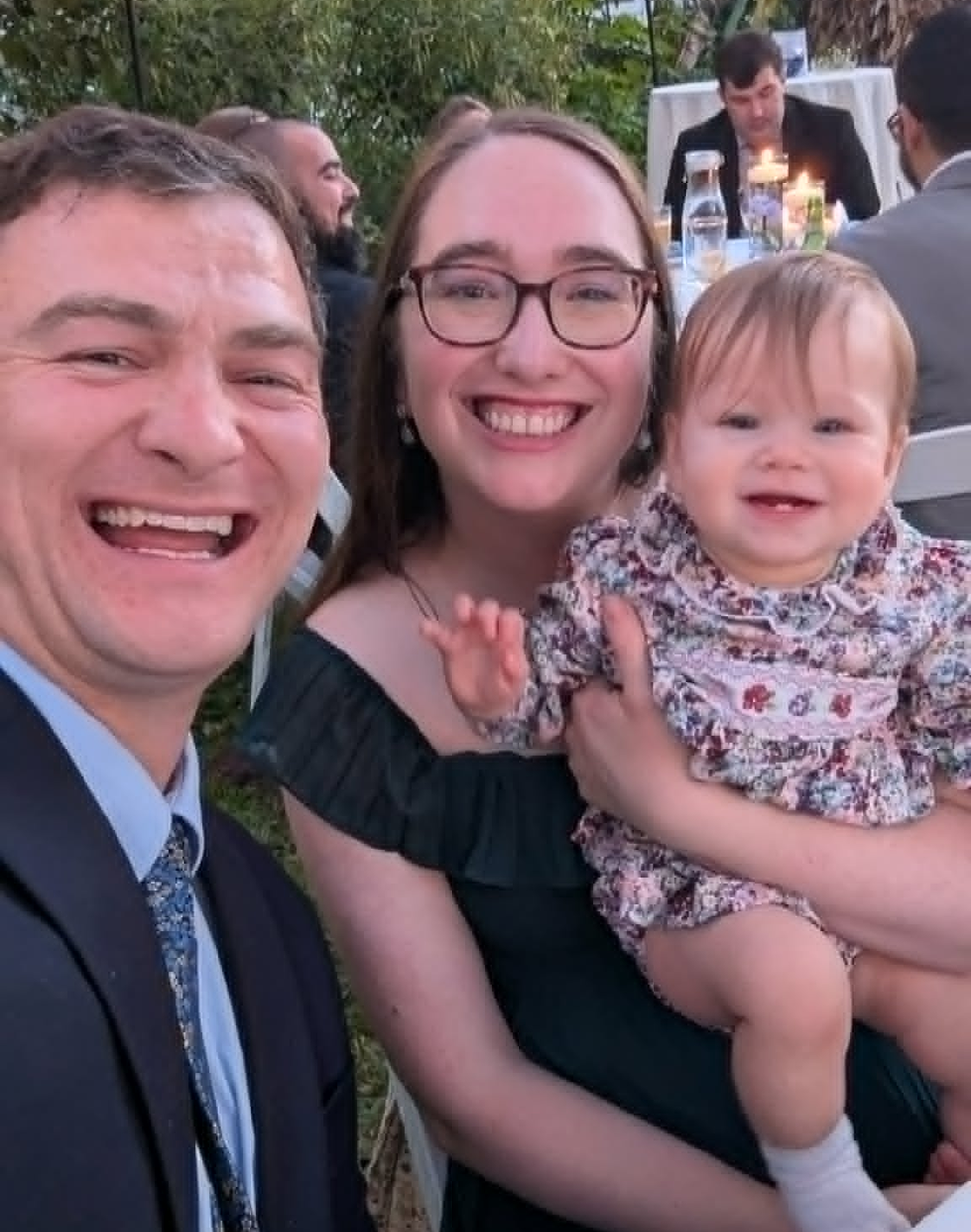
A huge part of Ethan’s being able to handle the stress of his job is the support of his wife and being able to talk about some of his work with her. The firefighters also eat meals together and talk about shared experiences, which helps. "You might have to heat up that meal for a third time before you get to finish eating it. We don’t make that worse by getting upset by it," Ethan adds. He enjoys his time off with his wife, caring for their one-year-old daughter.
As lead instructor for the department’s recruit school, Ethan observes, "Recruit school is hard, intentionally so. That way, when you’re on the job and it’s hard, you’re ready. Each day brings something different. There can be traumatic situations. We have to de-escalate people, sometimes they get angry with the people who are there to help. You can’t join the problem; you came there to fix it." He adds, "We sell recruits on the idea that they and most people, when they go home, have electricity, heat, food, but not everyone they will encounter on calls has that."
"Training is so important to prepare people for experiences they may have on the job. The fire department responds to every fire call as though it’s a major fire with people trapped, with a firefighter there and injured. They treat shed fires the same way as occupied homes. People could be living there," Ethan says, "Vacant buildings don’t start fires by themselves." Salisbury Fire Department is recognized as one of the premier fire departments in the state, known for training their firefighters well.
Ethan is very grateful for his life, realizing that many people have much less in terms of things, education, and experiences. He is glad Catawba taught him life lessons that have kept him empathetic. He knows empathy is important. "Some first responders can lose their empathy and become angry or reactive to the stress they encounter in the job. We can’t take our stress with us to these situations where the people we’re trying to help are stressed, it adds to it and makes it harder," Ethan explains. "These people are having bad days, they are often upset, and they’re calling for help. As first responders, we signed up for people to call us for help whenever they needed help. If the dispatcher isn’t sure who to send to a call, they often send the fire department since they are equipped to address a variety of needs. We can’t be certain what we’re actually going to encounter on site or how a situation may develop." Since COVID, nearly 80% of the fire department’s calls are medical, the rest are fire-related, car accidents, and alarms.
Ethan adds, "We need more empathy across society, we need people to do something if they are able. Thoughts and prayers and awareness are a start, but hands-on help is better," Ethan notes.
There are some people who call for non-emergency reasons. If the fire department is at a non-emergency call when a true emergency comes in, the outcome can be heartbreaking. Ethan recalls one situation; their truck was second on the scene to a fire where there was loss of life. Ethan still questions, "Had we been able to get there sooner, instead of being detained responding to the non-emergency call, would we have been able to save lives?"
More people are needed in firefighting, police, and emergency medical services, Ethan notes. He finds his job rewarding, but sees the need to improve working conditions, hours, benefits, and salaries, which can help attract and retain personnel.
Ethan encourages people to put themselves in other people's shoes any way they can. "Doing that would help us understand each other. As a society we don’t do enough hard things." That goes for the college experience. "You want to look back and cherish the difficulties. You don’t want it to be easy, you should take hard classes, go outside your comfort zone, join clubs and groups, learn to speak in public, go build a Habitat house, serve food at the soup kitchen, volunteer at the public library to help people learn to read."
Firefighters learn a way of being. Ethan explains, "We don’t go to fires to prove we’re good at fires. You prove you’re good at fires by helping cook dinner, being johnny-on-the-spot for a medical call. By doing the grunt work no one wants to do. That also applies to regular life. Pick up trash as you walk by, greet people, wish people well and mean it."
"Catawba helped me find vocation," Ethan says. He encourages his alma mater: "Don’t shy away from doing what they need to do because it’s hard or it doesn’t make money. Stick to making well-rounded people."
