Capital Projects: District Energy & Modernization
District Energy & Modernization
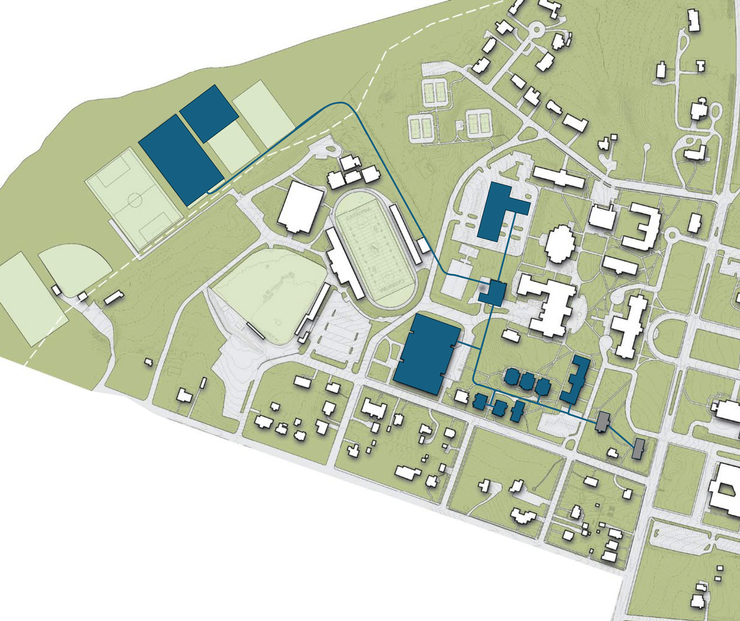
District Energy & Modernization
CONSTRUCTION START DATE |
ANTICIPATED COMPLETION DATE |
March 2025 |
August 2028 |
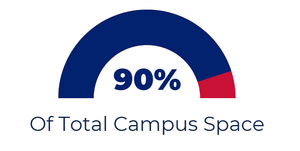
A closed-loop geoexchange heating and cooling system that will connect 90 percent of the campus infrastructure and bring us closer to a zero-carbon campus.
Phase I: Current Phase: Construction
(Updated: 8/12/26)

By the Numbers
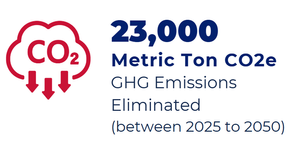
Note: Outcomes are based on completion of all DEM phases.
Project Scope
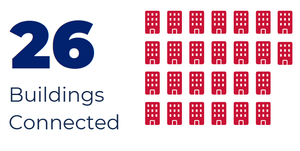
The District Energy and Modernization (DEM) project is an evolution of Catawba’s use of renewable energy and a critical step toward maximizing efficiency. When complete, this geoexchange system will connect 26 buildings to a district system that will provide heating and cooling for decades to come. This initiative addresses critical deferred maintenance needs while aligning with Catawba's sustainability goals and commitment to achieving a zero-carbon campus. This system truly embodies the Campus as Forest cycling ethos — minimizing waste and maximizing energy efficiency.
What Does this Mean for Catawba?
- Healthy Buildings: Creates comfortable and healthy spaces to learn, live, and play.
- Clean Energy: Eliminates fossil fuels from buildings and the associated pollution.
- Living Laboratory: Provides experiential learning for students, faculty, and community.
- Sustainability Leadership: Realizes Catawba’s Climate Action goals.
- Innovation: Models sustainability for higher education peers and the world.
- Stewardship: Invests in Catawba’s future, yielding dividends for decades.
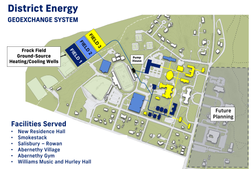
Details
Location: Campus-wide
Project Team: RMI, Brailsford & Dunlavey, CMTA
A closed-loop geoexchange system is being added in four (4) phases to provide efficient, clean energy to heat and cool campus facilities.
How Does It Work?
A closed-loop geoexchange system continuously circulates water through buried pipes. Depending on the season, the water either deposits or absorbs heat from the ground.
Closed loop systems are filled once and require a moderate amount of water because the same water is used repeatedly. No fluid escapes, and no outside materials can enter the pipes.
Geoexchange heat pump systems use the ground for energy storage, resulting in very high efficiency. Heat from summer cooling is stored in the ground and recovered during the winter for heating.
Our Commitment
As we rapidly approach the critical threshold for irreversible damage to our planet, it is no longer a question of should, but how we eliminate the college’s dependence on fossil fuels, meet our emissions reduction goals, and support our campus climate action commitments.
This endeavor will support those needs and push the boundaries of what is possible, not just for Catawba, but for our peer institutions, our students, and our community.
As we shape the next generation of thinkers and leaders, we must be an example to question the status-quo and implement creative thought leadership to positively impact the world.
AFTER - EROSION CONTROL
(Pictured here: wellfield erosion control construction and well transfer "geyser")
