Audaciously Good, by Intention
Catawba is working hard to build a better world.
With Campus as Forest, “better” means regenerative for all.
The horizon is ripe for innovation that thoughtfully and intentionally resets our relationship with the rest of Nature to one that delivers positive impact for all. Catawba’s rich legacy and traditions make us uniquely positioned to embrace this opportunity and have an outsized impact beyond our campus.
Our innovative Campus as Forest (CaF) initiative, centered on regenerative education, thinking, and design, is an investment in Catawba and future generations. Grounded in our identity, mission, and values, CaF weaves together our commitments to sustainability, vocation, community engagement, and well-being, equity, and belonging (WEB), into a holistic vision for the 21st century.

Campus as Forest Vision
Our roots run deep.
Building on our foundation of scholarship with character and culture for service, and a rich history of environmental and sustainability leadership, we are boldly embracing an urgent calling to evolve and expand our notions of stewardship with a goal of fostering positive impact for people and Nature in all that we do.
The manifestation of this ambitious vision transforms Catawba into a reimagined living-learning laboratory. From working with faculty to integrate regenerative education principles across disciplines to implementing our regenerative campus landscape plan, from cultivating regenerative leadership to collaborating across our three centers of excellence, Campus as Forest seamlessly weaves together the breadth of what we do in service to regenerative outcomes, transforming the way we prepare our students, support our faculty and staff, and collaborate with communities locally and globally.
Our Campus as Forest (CaF) vision is to co-create the conditions for a thriving and resilient Catawba natural and cultural ecosystem that delivers enduring shared value for, and regenerative stewardship of, our diverse communities.
Campus as Forest Core Principles
As a convener, catalyst, and cultivator of ecosystem thinking, we draw inspiration from Nature’s time-tested strategies for resilience to embed the following core principles in all Campus as Forest initiatives:
Thriving Ecosystem
We envision our Catawba ecosystem as the vibrant living, breathing forest next door—with dynamic interdependent communities that thrive on diversity, connection, adaptation, and the co-creation of positive impact.

Co-creating Shared Value
Like the mycelium fungal networks beneath the forest floor, we build our relationships within and between our diverse communities—on campus, in our community, and across the nation—on mutual support rooted in our shared goal of a regenerative world, co-creating shared value that fosters long-term success and resilience.
Expanded Community
In recognition that thriving people require thriving Nature and it will take all of us, we expand our notion of “community” to include biodiversity as our neighbor and partner, nurturing a culture where we—humans and all living species—are stronger together.
Nature’s Guidance
We learn and implement strategies from Nature’s 3.8 billion years of experience evolving in response to complex, dynamic challenges to disrupt our assumptions about what’s possible and accelerate the creation of regenerative outcomes.
Strategic alignment
Our strategic plan, “A College of Our Own” approved by the Board of Trustees in June 2023, sets the stage for us to collaboratively and intentionally drive this work forward.
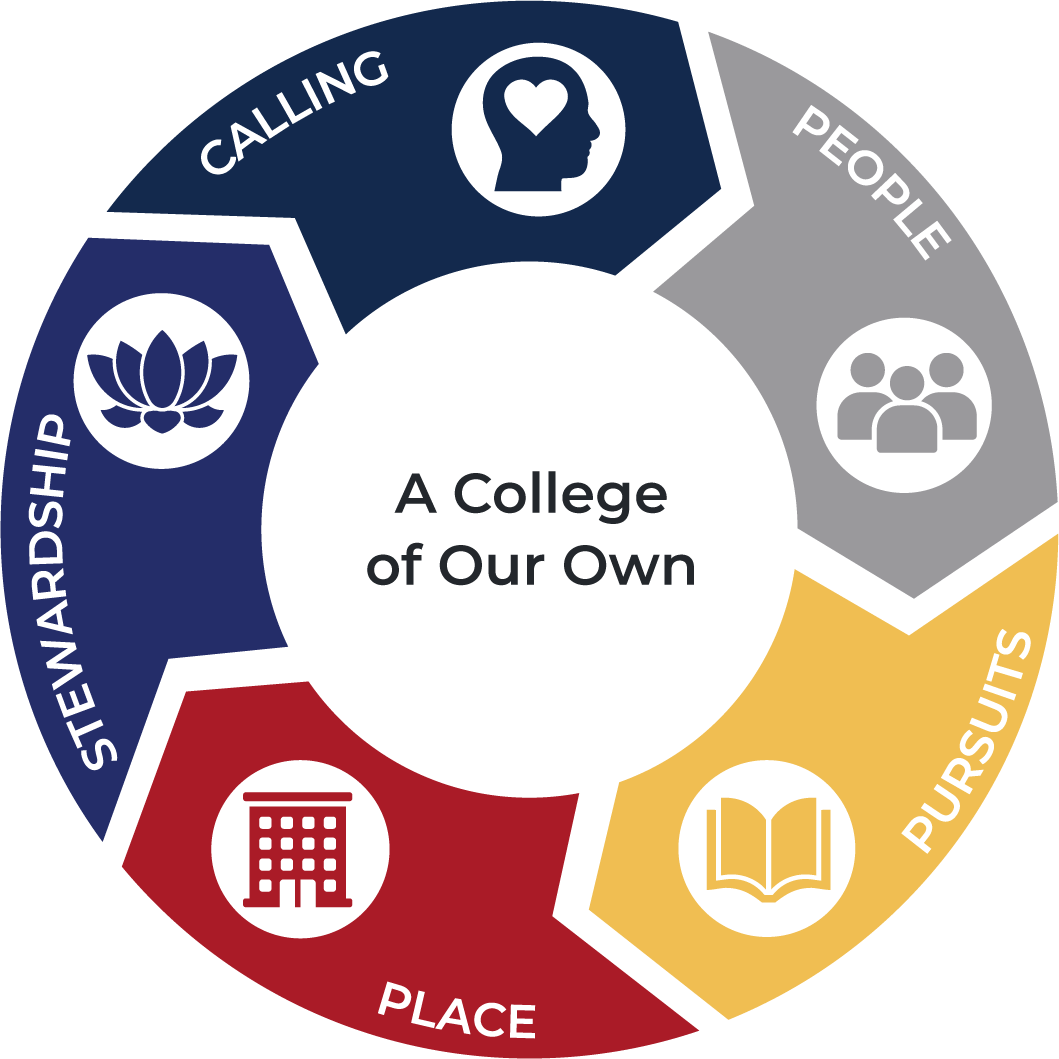
CaF seamlessly builds upon the foundation of the 2023 strategic plan, refining the Catawba notion of environmental and sustainability stewardship into one that is regenerative, and recognizing the distinct opportunity to co-create a compelling, equitable, and innovative learning experience that drives measurable regenerative outcomes now and into the future.
With a culture of care and a mindset of abundance, CaF aligns with “A College of Our Own” to engage all aspects of the Catawba ecosystem to drive meaningful impact for our students, faculty and staff, and community partners, including Nature. By naming and integrating one of our most valuable partners—Nature—into our long-term strategy for success and resilience, we not only benefit from and enjoy regenerated natural resources, but also further our position as a thought leader in higher education, attract and retain students and faculty, and build pride in our alumni and donor networks.
In the spring of 2025, Catawba took a preliminary step towards this vision with the inclusion of the Campus as Forest vision in the Catawba College Campus Master Plan. Building on this momentum, the college is moving forward with the manifestation of this vision with the development of the Regenerative Campus Landscape Plan.
In sharing our story, we can catalyze our partners at home and beyond to join the conversation and initiate action in their own campuses and communities and accelerate the global shift to a regenerative world.

Regenerative Stewardship
Expanding our stewardship of institutional resources to include our natural resources, integrating our core value of sustainability with fiscal responsibility to achieve long-term resilience.

Combining Theory & Practice
Creating experiential regenerative education experiences that broaden and deepen an individual’s understanding, connection, purpose, and curiosity within the context of the whole.
Weaving a Regenerative WEB
Cultivating an open culture of participatory problem-solving around our shared purpose of regenerative social impact, co-creating shared value networks across our campus and beyond.

Living Learning Laboratory
Embodying regenerative education, thinking, and design that supports and/or compliments the core curriculum, faculty expertise, campus operations, and community partnerships.

Welcoming Destination
Creating a welcoming regenerative campus open to the community, made stronger through community partnerships.
WHAT DOES IT MEAN TO THRIVE?
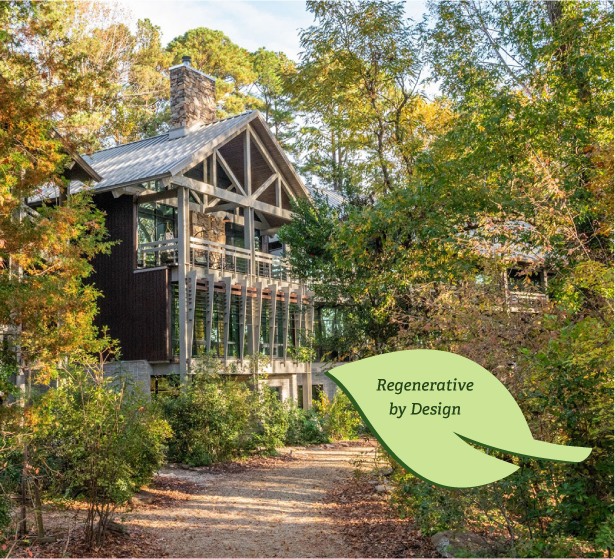
The Fred Stanback Jr. Ecological Preserve is not just a beautiful place to learn, walk, and bird watch—it actively creates the conditions for life, including us, to thrive here.
It cleans the air we breathe and the water we drink, helps stabilize our local climate, slows and absorbs water, sequesters its share of carbon, and provides homes and food for the life that also calls this place home.
These ecological conditions aren’t just nice to have—we depend on them for our survival, wellbeing, and resilience. Unwittingly, human land use changes at scale have reduced the ability of the species in our landscapes to deliver these benefits, resulting in disruptions like increased flooding, longer periods of drought, higher temperatures, and greater health risks. But these changes are reversible.
Through collective action across our landscapes, we can begin the pixelated healing necessary to secure a resilient future. The Campus as Forest initiative asks:
How can the rest of our campus deliver positive impact like the Stanback Preserve?
How can we embody Nature’s positive impact strategies into our academic mission, campus operations, and community partnerships to thrive into the future?
Net zero, neutrality.
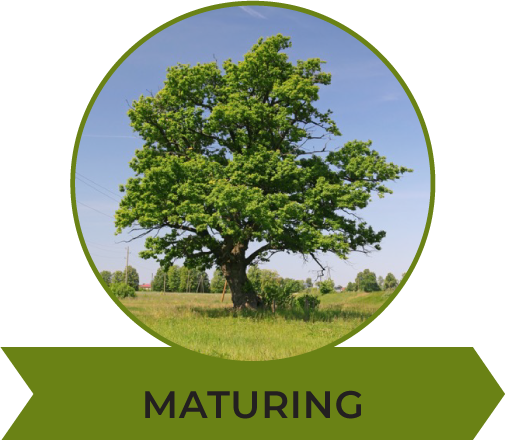
A few initiatives benefit the ecosystem and community to some extent.
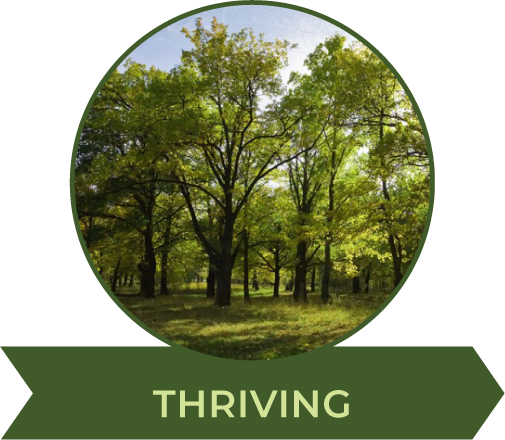
Every decision, service, and process benefits the ecosystem and community; The organization is fully integrated into a thriving ecosystem.