FACES of GOOD
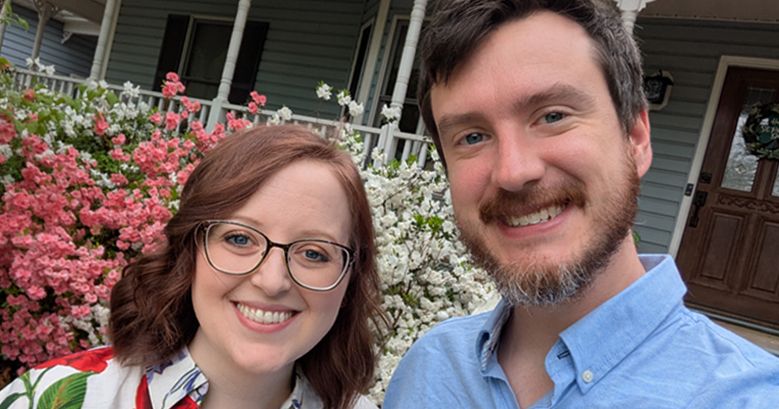
Amanda Rushing '12
Associate Professor of Biology, Catawba College
- PhD, Microbiology and Immunology
Blake Rushing '13
- Assistant Professor, UNC Chapel Hill Nutrition Research Institute
- PhD, Pharmacology and Toxicology
“Catawba doesn't just produce smart people, our mission is also to produce good people.” - Amanda
Amanda and Blake Rushing came to Catawba as high school sweethearts from Union County, grew up together on campus, earned their PhDs at East Carolina, and found their way back to Salisbury, Amanda as an associate professor at Catawba, Blake as faculty at UNC Chapel Hill's Nutrition Research Institute in Kannapolis.
In between, they got married at Catawba's Omwake-Dearborn Chapel. Their career paths are now adjacent enough that they have built an informal research pipeline connecting Catawba students to real-world lab experience at Blake's institution. Both give back financially, both mentor students, and both speak about Catawba's mission in identical terms: it doesn't just produce smart people. It produces good ones.
MARRIED AT THE CHAPEL
In the middle of their PhD programs at East Carolina, Amanda and Blake returned to Catawba's Omwake-Dearborn Chapel to get married, the one place they both felt most connected.
THE PIPELINE
Amanda and Blake built an informal research pipeline placing Catawba students in Blake's UNC Chapel Hill lab, giving undergrads hands-on research experience at a major research institution before they graduate.
CATAWBA REACHES CHAPEL HILL
Catawba alumni serve on the board of the Nutrition Research Institute where Blake works, a reminder that the College's reach into the community extends well beyond its own campus.
Two Paths, One School
Amanda and Blake were looking at colleges together as high school sweethearts. Blake knew he wanted Catawba before Amanda did. She came first, he followed a year later, and they spent four years growing up together at a school that gave them both something they didn't fully appreciate until they left: the kind of community and support that isn't available everywhere. When they went to East Carolina for their PhDs, Amanda in microbiology and immunology, Blake in pharmacology and toxicology, the contrast was immediate. They were still supported, but not in the same way. The relationship between students and faculty at Catawba, the sense of being known, was something they had taken for granted until it wasn't there.
The Shock of Leaving
Going from Catawba to a large research university is a transition that both Rushings describe the same way: a shock. Not because East Carolina wasn't excellent, but because the culture of personal attention they had grown accustomed to simply doesn't exist at the same scale elsewhere. The friendships they made at Catawba are still their friendships. The professors they connected with are still people they think about. They both emerged from Catawba with strong foundations for their careers, and both carry the habits of mentorship and personal engagement into their own teaching, precisely because someone did that for them.
Coming Back to Give It Forward
When a faculty position opened at Catawba, Amanda applied. A big part of the decision was the chance to offer the same mentorship that had shaped her to a new generation of students. Blake's path back to the region came through a postdoc at the Kannapolis research campus, which led to his faculty position at the UNC Chapel Hill Nutrition Research Institute. Proximity made possibility: their adjacent positions led naturally to a pipeline, informal at first, where Amanda sends high-performing Catawba students to gain research experience in Blake's lab. Several Catawba graduates now work there. The pipeline builds the research, Blake says, and it builds the students.
Good Beyond the Classroom
The Rushings give back in multiple ways. During Catawba's Day of Giving, they direct funds to areas that matter to them, the sciences, and in recent years, the music department's effort to raise funds for a Steinway Piano through Jeff Little's annual benefit concert. Amanda attended and gave separately after that event, moved by watching Catawba students perform alongside professional musicians. Blake notes that Catawba alumni sit on the board of the Nutrition Research Institute where he works, the College's influence rippling outward into research that affects the wider community. Donating to Catawba, he says, benefits more people than you might realize.
What We Hope to Leave
Their legacies, both say, aren't about themselves. Blake wants students to understand that their time at Catawba isn't just about learning things to serve yourself, it's about becoming part of a community and helping the world be a better place. Amanda's hope is simpler: that the students she teaches remember not the facts she taught them but the how, how to work in a complicated world, how to face challenges, how to be good people and good members of their community. She also points to the interdisciplinary education both of them received as something that shaped them well beyond their majors, making them better problem solvers, better thinkers, better at seeing the world from more than one angle. That, she says, is the Catawba advantage that's hardest to explain and most impossible to overstate.
TOGETHER, WE CAN DO A WORLD OF GOOD.
The Where Our Good Goes campaign is a comprehensive campaign with the goal of securing Catawba College for generations to come.
