FACES of GOOD
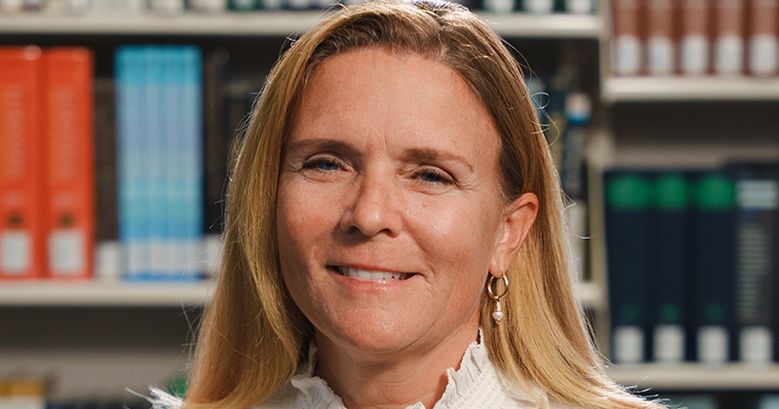
Kimberly Creamer, PhD
- Dean, Goodman School of Education
- Assistant Professor of Literacy Education
- First-Generation College Graduate
“Someday you'll be telling your own students about being first-generation — and that's how good goes far.”
Kim Creamer didn't plan to become a dean. She has a PhD, not an EdD, for a reason, she wanted to teach, not administrate. But when Catawba needed someone to step into leadership, she stepped in, and she hasn't looked back.
A former first-grade teacher who left the classroom to earn her doctorate and train future teachers, Creamer joined Catawba in the 2014-2015 academic year as an Assistant Professor of Literacy Education and grew into the role of Dean of the Goodman School of Education. She brings something to that role that no job description could have listed as a requirement: the lived experience of being the first person in her family to go to college, not knowing how to navigate the system, and having to figure it out alone. That experience shapes everything she does for the first-generation students who arrive at Catawba carrying the same weight she once did.
FIRST IN HER FAMILY
Creamer was the youngest child in her family and the first to attend college, a path she now walks alongside every first-generation student who comes through the Goodman School of Education.
A DECADE OF IMPACT
Since joining Catawba in 2014, Creamer has grown from Assistant Professor to Dean, a role she never saw coming, and one she now can't imagine leaving.
FULLY LICENSED, FULLY READY
In a field where many institutions have moved to alternative licensure shortcuts, Creamer's graduates leave with full traditional licensure and complete student teaching experience, a distinction she has fought to protect.
A Home from the First Step
Kim Creamer didn't go to Catawba as an undergraduate, she went to William & Mary for her bachelor's and master's, then Chapel Hill for her PhD. But when she drove onto Catawba's campus to interview, she called her husband before she even got out of the car. The brick walkways, the old buildings, the feel of the place, it reminded her immediately of William & Mary. More than the campus, it was the people in the interview room: the questions they asked weren't about filling a position, they were about finding someone who wanted to be part of the community. She asks those same questions now that she's on the other side of the table. It was, she says, a feeling of coming home, and that feeling has never gone away.
First in Her Family
Creamer was the youngest in her family and the first to go to college, which meant carrying an enormous amount of pressure without a roadmap. Her freshman year grades reflected it, not because she wasn't capable, but because no one had taught her how to do college. She didn't know how to manage time, how to talk to professors, how to ask for help. That experience is the lens through which she sees every first-generation student who walks into her office. She tells them she was first-gen too. They're usually shocked. She tells them that someday they'll be telling their own students the same story. That, she says, is how good goes far.
The Students She Carries
The stories accumulate over a decade. The junior student who had never been shown how to use a calendar, Creamer sat down and built one with her, and within a year that same student was teaching the method to another. The young man who walked into class one day with his hoodie pulled over his head and wouldn't look up, Creamer didn't just direct him to counseling, she walked him there and sat with him until he was ready for her to go. The student working three jobs who was a few dollars short of paying for her practice core exam, Creamer found funding, handed her a gift card the next day, and made her put in half of what she had saved herself first. That student went on to be one of the best student teachers in the program, landed her top-choice school after being recruited by three, and now holds the kind of job Creamer tells every candidate they deserve to chase.
Small But Mighty
Creamer's phrase is consistent: small but mighty, and she's not apologizing for it. When alternative licensure shortcuts began spreading through higher education, she went to President Nelson and made the case for the opposite direction. Let other institutions chase numbers with unqualified candidates, she argued. Let Catawba be the school that sends fully licensed, fully trained, student-taught educators into the world. He told her to go for it, and she did. Her graduates, she believes, are a dying breed in the best possible way, the kind of teachers districts recruit hard, the kind students remember for the rest of their lives.
The Ripple Effect
The proof of what she's built shows up in the alumni. Hayley, a former student now teaching special education, fought her school's administration to get her students, kids who had been kept in a self-contained classroom, the right to eat lunch in the cafeteria with their peers. She won. Other students are now choosing to sit with them. Creamer heard the story over lunch, two years after graduation, and saw in it everything she believes about what a good teacher can do. Not just in one classroom, but eventually at ten schools, at a whole district, at a seat at the big table. That's where she encouraged Hayley to aim. That, she says, is what good going far actually looks like.
TOGETHER, WE CAN DO A WORLD OF GOOD.
The Where Our Good Goes campaign is a comprehensive campaign with the goal of securing Catawba College for generations to come.
