EMBODYING THE VISION ON CAMPUS
In myriad ways big and small, we are centering regenerative thinking at the core of everything we do.

Creating a Regenerative Landscape
Inspired by arboretums, botanic gardens, and the Stanback Ecological Preserve, we will seamlessly create ample moments across our campus for students and the community alike to celebrate, reconnect with, and be inspired by our beautiful natural heritage. At the same time, our campus design will have purpose—increasing our contribution to student, ecological, and community wellbeing and resilience. The result will make the Catawba College campus a destination for everyone to experience regeneration in action.
From one of the first Living Building Challenge projects in our state to small pollinator gardens across campus and from student environmental steward programs to integrating sustainability and environmental education into our core curriculum, we are demonstrating that with thoughtful intention, our interwoven Campus as Forest initiatives are creating a regenerative whole that will deliver positive impact greater than the sum of its parts.
The following examples illustrate how we have already begun to embody our Campus as Forest vision throughout our campus and beyond.
As we move these projects forward, we’ll be sharing the Ecosystem Intelligence™ analyses for our campus projects on our website to show how much progress we’ve made and what we’re working on next to continue to close the gap.
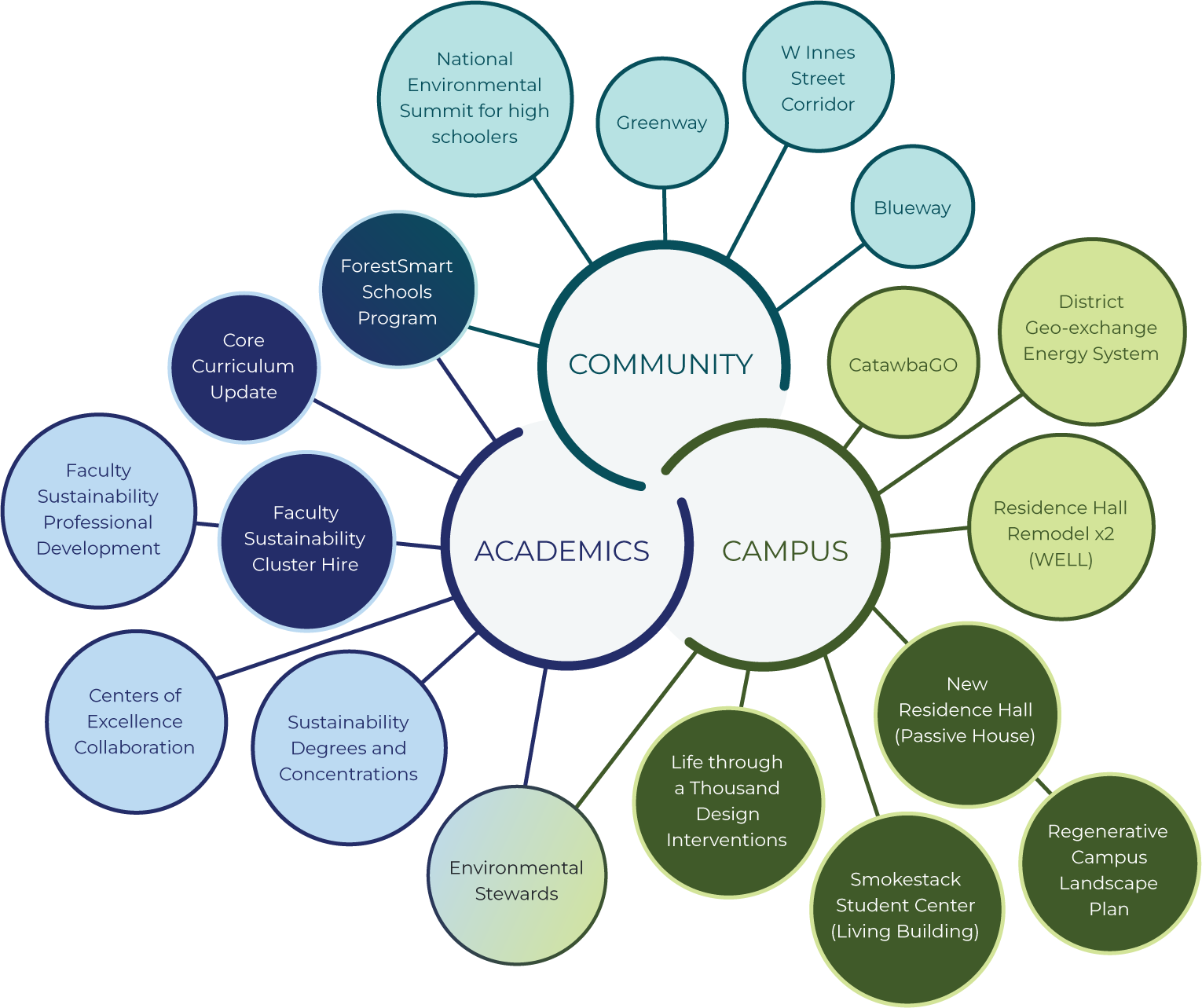
Life through a Thousand Design Interventions

Smokestack Student Center
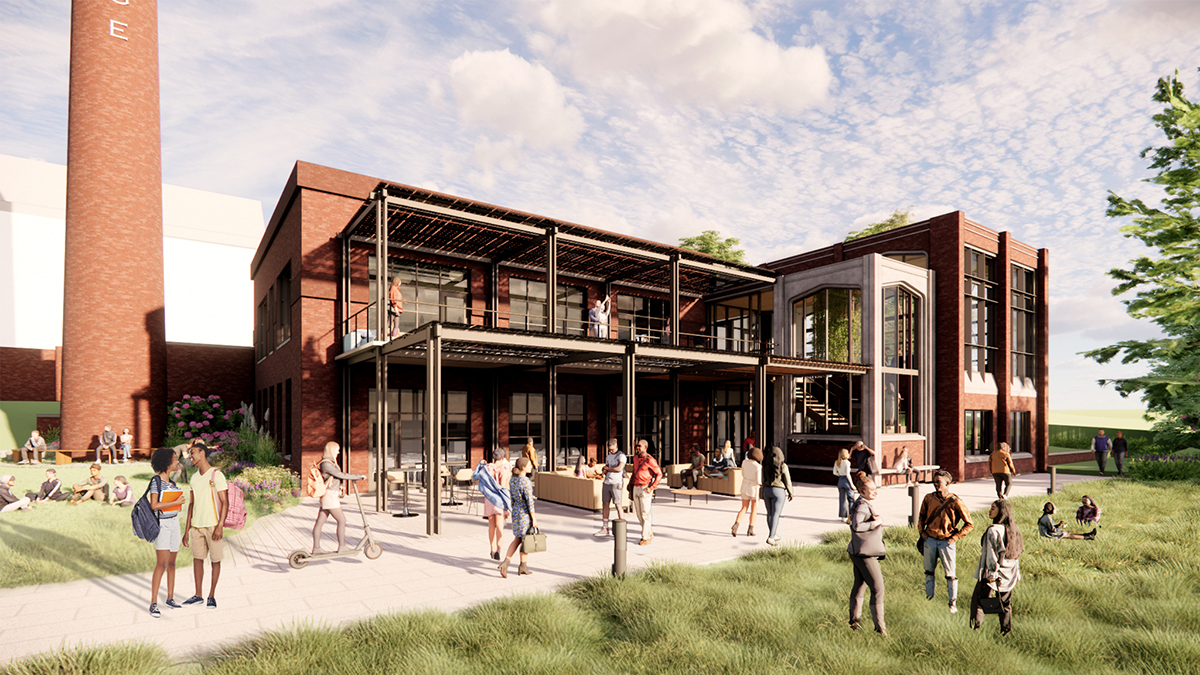
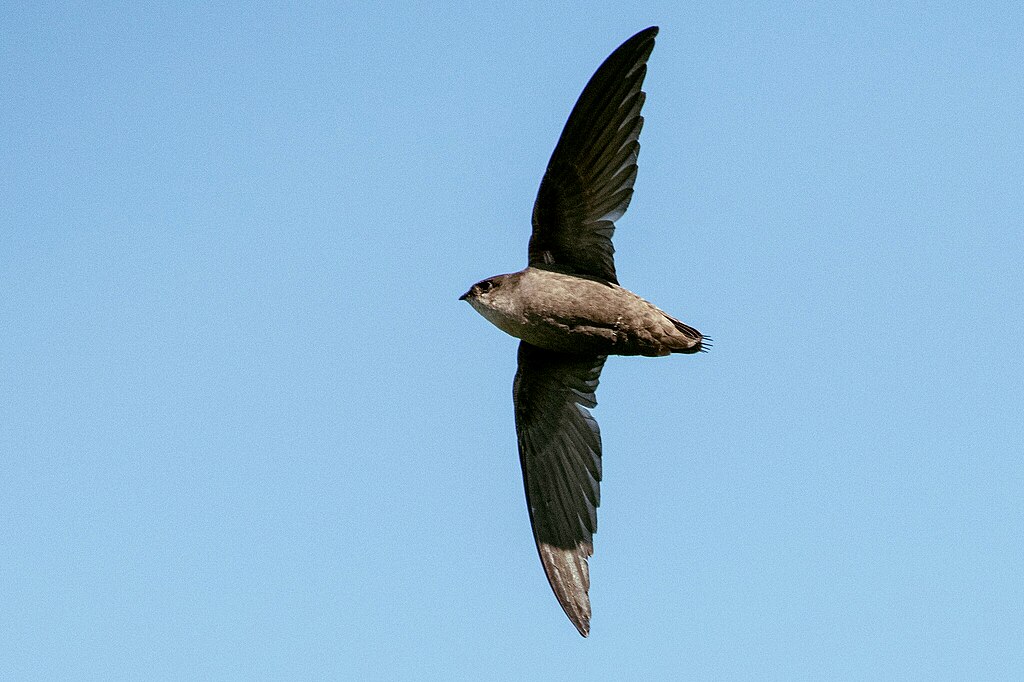
Moving from the Past to the Promise of the Future
Once an operational coal-burning power plant used to heat the campus as recently as the 1990s, the Smokestack is being reimagined through a regenerative design approach as an active, energy positive student life hub. As the first Living Building in higher ed in North Carolina and with an open invitation to the community, the Smokestack will be a destination that embodies our Campus as Forest vision to move beyond “less bad” toward regenerative transformation for our students and the community at large.
Inspired by Nature’s ability to not only live within the means of the resources available locally but also deliver value to the other species that also call that place home, the Living Building Challenge is a holistic certification that requires the building deliver positive impact. With solutions like connecting to the new District Energy system and centering biophilic design with expansive views and access to Nature, the Smokestack project will pursue the Core Imperative and the Energy, Place, and Beauty Petals, which dive more deeply into specific challenging areas.
Built into a slope, the site will also manage water through on-site storage for reuse in the building and integrate a water feature into the landscape that will slow and absorb stormwater flow while also supporting native plant species that provide pollinator support.
NEW RESIDENCE HALL
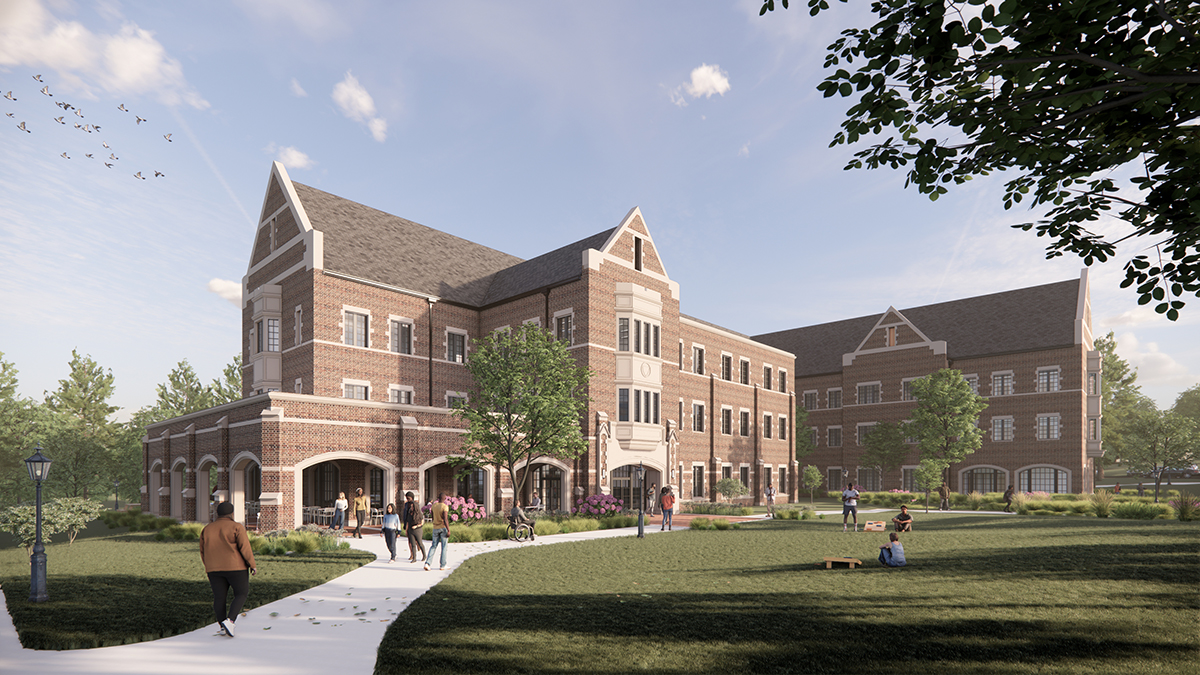
Building Smarter and Deepening Sense of Place
In what was once an asphalt parking lot, we are building a new Residence Hall designed to meet the elite Passive House certification. By using advanced energy modeling and design techniques, we project a remarkable 55 percent reduction in energy use compared to typical North Carolina standards. The high-performance building envelope will not only provide stable, comfortable living spaces but also reduce heating loads by 44 percent and cooling loads by 75 percent. In addition, the residence hall ties into the District Energy system, providing on-site renewable geo-exchange energy for the building, helping to bring us closer to our goal of a zero-carbon campus.
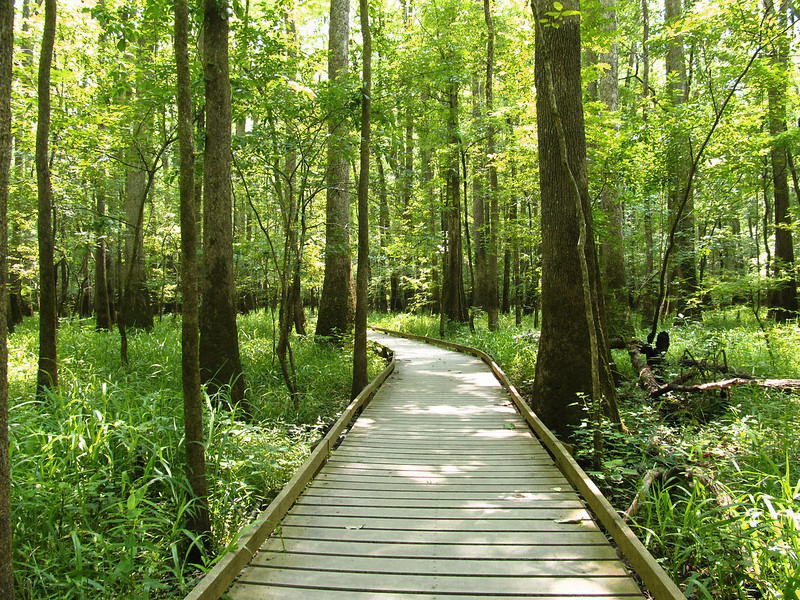
Surrounding the hall, mixed-use landscaping will support student recreation and gathering while also deepening their sense of place with unique wayfinding in natural areas that encourages residents and visitors alike to slow down, observe, and experience Nature. Native tree and plant species in natural areas support pollinators, water collection and filtration, increasing biodiversity support and helping to improve water quality. Located close to the building, trees and shrubs also cool the air and provide shade, reducing heat gain on the lower stories of the hall while also providing visual screening for first floor residents.
Regenerative Campus Vision:
By 2051, Catawba College will be the model for regeneration and the new standard for higher education sustainability, revolutionizing education, environmental stewardship and campus life.
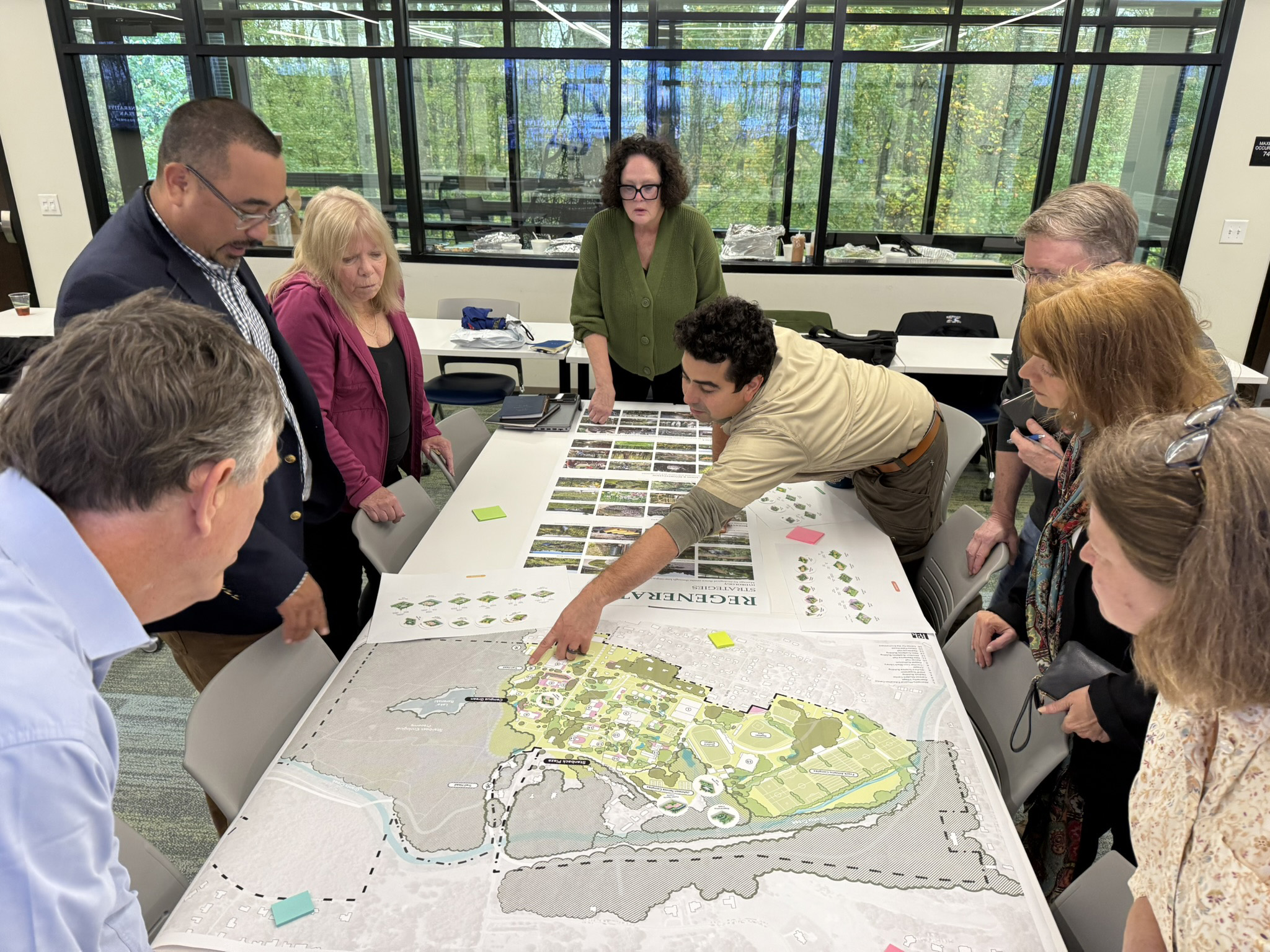
Catawba launched its Regenerative Campus Landscape Plan process in the fall of 2025. The plan builds on the school’s environmental legacy, embodying the “Campus as Forest” vision to move the campus beyond carbon neutrality to positive impact. The plan aims to create a roadmap to foster a shared “Canopy” of Experience, Regeneration, and Learning, establishing Catwaba as a regional hub and destination for regenerative education and design, inspiring others to join in shaping a resilient future for their communities.
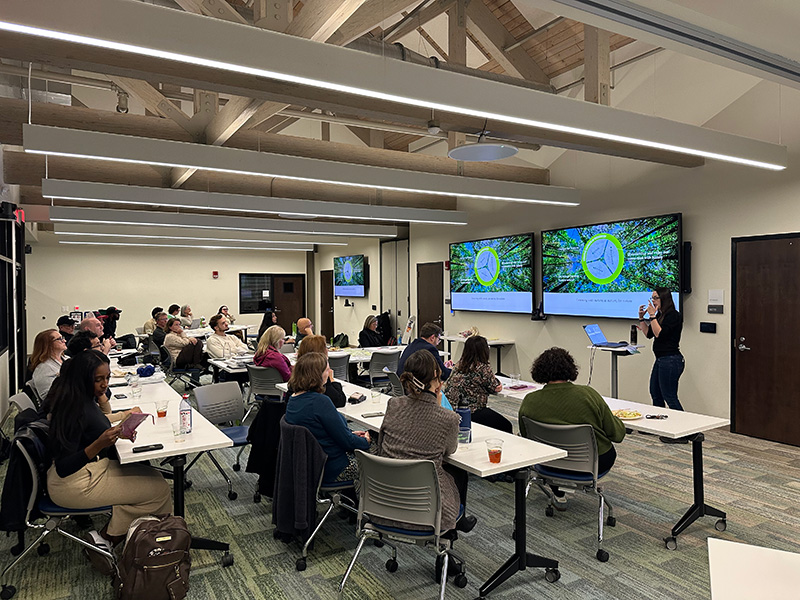
Designed by HOK as an inclusive and iterative stakeholder process, the plan incorporates valuable insights from students, faculty, staff, campus leadership, community members and city officials from Salisbury and Spencer. The plan is deeply informed by Nature through collaboration with long-time partners Biomimicry 3.8 and EcoMetrix Solutions Group, leveraging Nature’s ecosystem performance benchmark and historic and current campus performance to establish performance goals. Learning from Nature’s local strategies and the Catawba community reinforce how to meet those goals through the development of core planning principles and the resultant design of campus spaces and landscapes that:
- Create a walkable campus core with continuous forest programs, transforming everyday life into an immersive experience
- Regenerate a living landscape that enhances hydrology, biodiversity, and resilience and a deep connection between people and the environment; and
- Foster a living-learning laboratory and campus atmosphere that cultivate collaboration, dialogue, and shared experience alongside research, teaching, and experimentation to solve complex challenges.
Regenerative Campus Landscape Plan
Regnerative Education for Regenerative Leaders
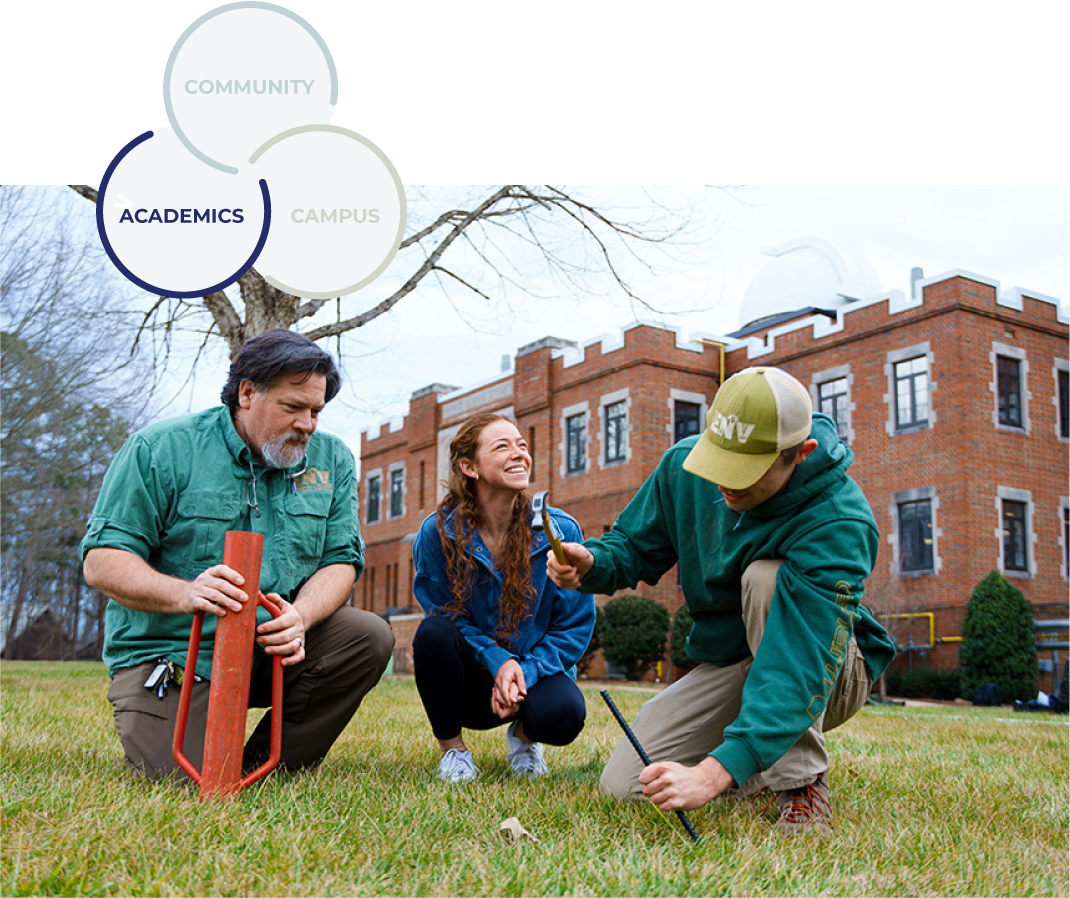
We know that a true shift towards a regenerative future will require all of us to think and act differently. That’s why we are supporting our students, faculty, and staff to help strengthen their knowledge and understanding of environmental stewardship and sustainability. We are also expanding our sustainability and environmental academic degrees and concentrations to ensure that those who want to go deeper have the opportunity to do so.

Faculty are collaborating to integrate sustainability and environmental education into our core curriculum by intentionally centering on character education, focusing on vocational, civic and environmental character, academic exploration, and lived experiences for students. Regardless of their area of interest, students will engage in multi-disciplinary curricula and co-curricular activities that connect academic subjects to real-world examples. This engagement supports students in developing a deeper understanding of how human actions have tangible impact on our every-day lives and the health of the communities we live in, and spark curiosity and creativity about how they can be in service to creating positive change. Phase one of our core curriculum pilot begins in the Fall of 2026.
Catawba just completed a multidisciplinary cluster hire to support environmental education and sustainability. This effort advances our commitment to both integrating diverse sustainability expertise across our academic disciplines and cultivating a culture of transdisciplinary collaboration. This targeted hiring approach will help catalyze a shift from approaching sustainability as a separate area of study to leveraging sustainability principles across all disciplines in service to cultivating responsible, ethical, proactive individuals who are committed to making a positive change in the world.
Regnerative Education for Regenerative Leaders
We know that a true shift towards a regenerative future will require all of us to think and act differently. That’s why we are supporting our students, faculty, and staff to help strengthen their knowledge and understanding of environmental stewardship and sustainability. We are also expanding our sustainability and environmental academic degrees and concentrations to ensure that those who want to go deeper have the opportunity to do so.
Faculty are collaborating to integrate sustainability and environmental education into our core curriculum by intentionally centering on character education, focusing on vocational, civic and environmental character, academic exploration, and lived experiences for students. Regardless of their area of interest, students will engage in multi-disciplinary curricula and co-curricular activities that connect academic subjects to real-world examples. This engagement supports students in developing a deeper understanding of how human actions have tangible impact on our every-day lives and the health of the communities we live in, and spark curiosity and creativity about how they can be in service to creating positive change. Phase one of our core curriculum pilot begins in the Fall of 2026.
Catawba just completed a multidisciplinary cluster hire to support environmental education and sustainability. This effort advances our commitment to both integrating diverse sustainability expertise across our academic disciplines and cultivating a culture of transdisciplinary collaboration. This targeted hiring approach will help catalyze a shift from approaching sustainability as a separate area of study to leveraging sustainability principles across all disciplines in service to cultivating responsible, ethical, proactive individuals who are committed to making a positive change in the world.
ForestSmart Schools Program
An Ecosystem of Opportunities for Schools, Teachers, and Students
Catawba’s Center for the Environment runs ForestSmart Schools, a comprehensive program supporting local schools and educators in place-based sustainability and outdoor learning to improve environmental literacy and foster a deeper connection to place, community, and self. Focused on STREAM education (Sustainability, Technology, Regenerative Learning, Environment, Arts, Mathematics), ForestSmart Schools includes a wide range of interdisciplinary programs aligned with the UN Sustainable Development Goals, Education for Sustainability Standards, and the NC Standard Course of Study.
Through teacher professional development and certification programs, K-12 STREAM curriculum, use of our campus as a living learning laboratory, and schools of excellence certification program, ForestSmart Schools engages our broader community in innovative hands-on exploration, discovery, and stewardship of the natural world.
In addition, Catawba students interested in environmental education can develop modules and implement them with students through the program, gaining valuable comprehensive real-world experience and feedback with the support of Catawba faculty.
Learn more on our website.

ForestSmart Schools of Excellence Certification
The Schools program recognizes and celebrates three levels of certification: School of Commitment, School of Achievement, and School of Excellence. Schools are recognized in five areas of implementation: School Culture & Community, School Sustainability, Curriculum Integration, Healthy Schools, and Innovation. Schools of Excellence are recognized for achieving success through 50 specific objectives in all five components.
ForestSmart Teacher Parents
A K-12 curriculum that focuses on environmental sustainability and interdisciplinary regenerative learning through the lens of the new North Carolina K-12 Science Standards and Science and Engineering Practices (SEPs). This curriculum incorporates compelling content, contextual, multi-sensory learning with environmental action through real-world projects that support the learning environment, children, and their communities.
The UnderStory Project
This ForestSmart “train-the-trainers” program provides professional development for formal and non-formal educators to strengthen content expertise, gain field experience, and learn how to optimize reflective learning strategies to inspire growth and resilience in students and the learning environment. Through the Certified ForestSmart Teacher Leader program, teachers model these high impact practices through The UnderStory Project curriculum.
ForestSmart Campus as Learning Lab
The ForestSmart Program promotes the use of the school campus as an outdoor living laboratory. This initiative focuses on place-based learning and the greening of school campuses to foster environmental literacy, native biodiversity, climate resilience, and healthier communities.
Salisbury Academy Pilot
Salisbury Academy served as a pilot site for The UnderStory Project. The K-5 Curriculum is being shared with teachers and environmental professionals in the summer of 2025. The middle/high school curriculum will be shared in the 2025-26 school year.