FACES of GOOD
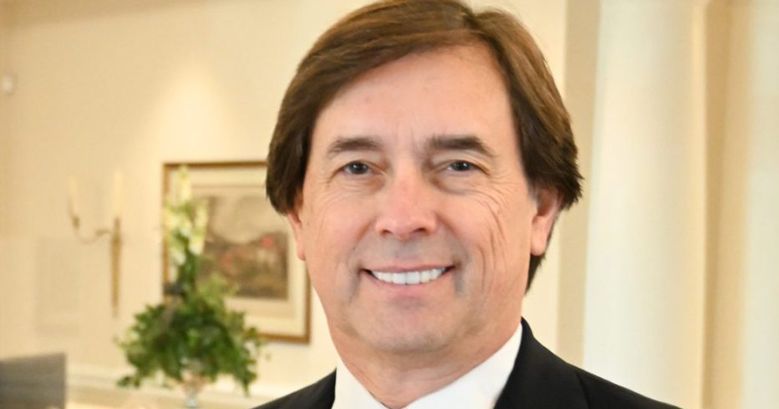
Bill Graham '83
- Catawba Alumnus
- Private Attorney
- Former Chair of the Board
- Environmental Toxin & Cancer Litigation Specialist
“Giving is an obligation and an honor, it's not a burden.”
Bill Graham has known he wanted to be a lawyer since he was three or four years old, and Catawba College made sure he'd be ready.
A political science graduate who arrived at Catawba in 1979 after finishing high school early and completing a year of school in Ireland, Graham credits the demanding, PhD-led curriculum and the personal investment of faculty like Dr. Sanford Silverburg with giving him the tools to compete with anyone, anywhere. After working at the Justice Department's Civil Division in Washington, prosecuting cases as a DA, and launching his own private practice in 1993, Graham has spent decades representing cancer patients affected by toxic environmental and workplace exposures, one of the most specialized and emotionally demanding fields in law. Today, he lives within golf cart distance of campus, serves as an unofficial advocate for Catawba's facilities and athletic programs, and remains as deeply connected to the College as he was the day he graduated.
PREPARED FOR ANYTHING
At Catawba, Graham took only what Dr. Silverburg told him to, political science, logic, finance, accounting, speech, and left with the tools to master any subject, depose any expert, and compete with graduates from Harvard and Penn.
ONE OF A KIND
Since the 1990s, Graham has represented cancer patients whose diagnoses stem from toxic environmental and workplace exposures, a highly specialized field with very few practitioners in the country.
ALL IN THE FAMILY
Bill, his wife Shari, their daughter Caroline, son-in-law Russ, and Trevor, a young man the Grahams informally took in while he was a a Catawba student, are all part of the extended Catawba family. A lab on campus bears Bill and Shari's name.
Always Wanted to Be a Lawyer
Bill Graham never wavered. From the age of three or four, when other kids were saying cowboy or fireman, Graham said lawyer, and he never changed his answer. That clarity of purpose shaped everything that followed: finishing high school early to beat a family move to Ireland, completing his leaving exam overseas, arriving at Catawba at 18, and walking straight into Dr. Sanford Silverburg's office to get his schedule handed to him. No electives. No detours. Political science, logic, finance, accounting, speech, whatever Silverburg decided Graham needed to know. It was demanding, and it was exactly right. When Graham later clerked at the Justice Department's Civil Division in Washington alongside graduates from Harvard and Penn, he held his own without hesitation. Catawba hadn't just prepared him for law school. It had prepared him for everything.
Brotherhood
His senior year of high school brought integration. Two schools merged, and Cherry was chosen by the governor to travel to schools to speak about making the transition smooth. Then came the prank. He missed a class, and white classmates told him the assignment was to write a poem rather than an essay on brotherhood. He wrote the poem. It went on to win a national championship. He received a scholarship, but because his father was a double amputee, he chose to stay local. Livingstone College wouldn't fund housing. Catawba gave him a full ride with room and board. That decision, born out of family loyalty and a poem written on false pretenses, changed the course of his life.
The Foundation Silverburg Built
Dr. Sanford Silverburg didn't just teach political science at Catawba, he built the architecture of how Bill Graham thinks. By restricting Graham's course load to only the subjects that would serve him in law and professional life, Silverburg gave him something most students never get: a curriculum designed specifically for where he was going. The lessons Graham carries most, ask the right question before worrying about the answer, learn how to read and comprehend and communicate, weren't soft skills. They were the tools he would use decades later to depose PhD pathologists, material scientists, thoracic surgeons, and geologists on behalf of people diagnosed with mesothelioma and other cancers from toxic exposure. The ability to walk into any room, on any subject, and command it, Graham traces that directly back to Catawba, and to Silverburg.
A Career Built on Lifting Others
The career that followed was a direct expression of what Catawba had cultivated. Cherry spent decades at Rowan Vocational Opportunities building pathways for people with disabilities, connecting them to community, advocating for their rights, and mentoring Catawba interns along the way. In 2002, he received the Governor's Award for community service. In 2012, The Arc sent him to Washington, where he met with President Obama to advocate for removing the word "retarded" from federal language. He received the Catawba Trailblazer Award for that work. In 2016, a drunk driver hit him and left him with a traumatic brain injury, a condition that ironically would qualify him for services at the very agency he has given his life to. He came out of retirement in 2020 to raise funds for a new facility.
Just a Big, Extended Family
For Bill Graham, the most distinctive thing about Catawba isn't a program or a statistic, it's the fact that the relationships never end. Dr. Silverburg became a social friend when Graham returned to Salisbury as a prosecutor. Dr. Bethany Sinnott, retired and living locally, still insists he call her Bethany. He still won't. Dr. Karl Hales lives in town, and Graham knows his grandchildren. His business law professor, Dr. Vance, lives nearby. Multiple generations of alumni share the same professors and the same stories. Graham's own family has grown around Catawba, his wife Shari, daughter Caroline, son-in-law Russ, and Trevor, a young man the Grahams took in while he was a struggling Catawba student who has since passed his PA boards and is entering dermatology. That, Graham says, is the Catawba way: you don't just graduate. You become part of the family.
Giving Is an Obligation and an Honor
Graham doesn't frame giving back as charity. To him, it is simply what you do when something made a difference in your life and you have the ability to pass it forward. He has served as chair of the board, spoken to student classes, helped fund a genomics lab on campus bearing his and Shari's names, and kept an eye on everything from tennis court roofs to scoreboard functionality during his near-daily golf cart visits to campus. His message to students has always been the same: prepare to be flexible and multifaceted, and find the work you'd do even if nobody paid you for it. His message to alumni is simpler still: not giving isn't an option. It's an obligation and an honor, and if you're paying attention, you'll find you get far more from it than you give.
Better Than Good
If Bill Graham has one frustration with Catawba, it's that the College remains too well-kept a secret for what it actually produces. As former chair of the board, he watched with genuine exasperation as an institution generating lawyers, doctors, teachers, CEOs, and civic leaders continued to fly beneath the radar. The Lilly Center for Vocation and Values, the Political Institute, undergraduate genomics research, these are not the offerings of a school that should be unknown. What unifies every graduate Graham has met, across every decade and every field, is a shared value system: scholarship, character, service, doing the right thing the right way. That, he says, is Catawba's real product. And it is, by any measure, better than good.
TOGETHER, WE CAN DO A WORLD OF GOOD.
The Where Our Good Goes campaign is a comprehensive campaign with the goal of securing Catawba College for generations to come.
